Showing posts with label Security. Show all posts

Friday, 14 May 2010

Thieves Flood Victim’s Phone With Calls to Loot Bank Accounts

Bank thieves have rolled out a new weapon in their arsenal of tactics — telephony denial-of-service attacks that flood a victim’s phone with diversionary calls while the thieves drain the victim’s account of money.

A Florida dentist lost $400,000 from his retirement account last year in this manner, and the FBI said the attacks are growing.

A spokeswoman for the Communication Fraud Control Association — a telecom industry organization — told Threat Level that although fraudulent transfers have been halted in a number of cases, the losses are increasing.

“I know it’s in the millions,” said Roberta Aranoff, executive director of the CFCA. “It has exceeded a million dollars easily.”

Last November, Robert Thousand Jr., a semi-retired dentist in Florida, received a flood of calls to several phones. When he answered them, he heard a 30-second recording for a sex hotline, according to the St. Augustine Record.

In December, he discovered that $399,000 had been drained from his Ameritrade retirement account shortly after he’d received the calls. About $18,000 was transferred from his account on Nov. 23, with a $82,000-transfer following two days later. Five days after that, another $99,000 was drained, followed by two transfers of $100,000 each on Dec. 2 and 4. The thieves withdrew the money in New York.

Thousand’s son, who shares his name, received similar harassing calls, though his financial accounts were not touched. Thousand did not respond to a request from Threat Level for comment.

The FBI says the calls were a diversionary tactic, meant to tie up Thousand’s line so that Ameritrade couldn’t reach him to authenticate the money transfer requests. FBI spokesman Bryan Travers said AT&T, Thousand’s phone carrier, contacted the agency’s New Jersey office to help investigate the matter. The agency has since seen at least 16 similar cases since November, most of them occurring in the last few weeks.

In some cases, the victims simply heard dead air when they answered their phone or heard a brief advertisement or other recorded message. Some victims had to change their phone numbers to halt the harassing calls.

The perpetrator who targeted Thousand created a number of VoIP accounts, which were used with automated dialing tools to flood the dentist’s home, business and cellphone with calls.

Generally in these cases, Travers said, the thief obtains the victim’s account information through some other means — perhaps through a phishing attack or other method — and then contacts the financial institution to change the victim’s contact information. In this way, the institution will call the thief instead of the victim to verify a money transfer request.

Many banks, however, now contact customers at their previous phone number when contact information on their account has changed.

But with these attacks, the institution’s calls are prevented from reaching the victim, whose phone is tied up with a flood of diversionary calls.

AT&T spokesman Marty Richter told Threat Level that the perpetrators then generally contact the financial institution posing as the victim to complain that a requested money transfer hasn’t gone through. When the institution discloses that it tried unsuccessfully to contact the victim to authenticate the transfer, the perpetrator says he’s been having phone troubles and verifies that the transfer should proceed.

Richter says that other telecommunication companies have been alerted to the problem and are warning customers when they call to complain about harassing calls that the issue may be related to their financial accounts. The victims are warned to place fraud alerts on their financial and credit bureau accounts and block any electronic fraudulent money transfers that may be in the works.

“This may appear to some people that they’re just having a connect issue with their phone carrier,” he said, “and we want to alert them that this may not be the case.”

Travers said that in most cases so far, the victims have acted quickly enough to prevent money from being drained from their accounts, but he says there may be many other cases that haven’t yet been reported to the FBI. He urged consumers who may have been victims to contact the FBI.

Read More http://www.wired.com/threatlevel/2010/05/telephony-dos/#ixzz0nt0tgdrn
By Kim Zetter

Thursday, 13 May 2010

German court orders wireless passwords for all

BERLIN (AP) -- Germany's top criminal court ruled Wednesday that Internet users need to secure their private wireless connections by password to prevent unauthorized people from using their Web access to illegally download data.

Internet users can be fined up to euro100 ($126) if a third party takes advantage of their unprotected WLAN connection to illegally download music or other files, the Karlsruhe-based court said in its verdict.

"Private users are obligated to check whether their wireless connection is adequately secured to the danger of unauthorized third parties abusing it to commit copyright violation," the court said.

But the court stopped short of holding the users responsible for the illegal content the third party downloads themselves.

The court also limited its decision, ruling that users could not be expected to constantly update their wireless connection's security - they are only required to protect their Internet access by setting up a password when they first install it.

The national consumer protection agency said the verdict was balanced.

Spokeswoman Carola Elbrecht told the German news agency DAPD it made sense that users should install protection for their wireless connection and that at the same time it was fair of the court not to expect constant technical updates by private users.

The ruling came after a musician, who the court did not identify, sued an Internet user whose wireless connection was used to illegally download a song which was subsequently offered on an online file sharing network.

But the user could prove that he was on vacation while the song was downloaded via his wireless connection. Still, the court ruled he was responsible to a degree for failing to protect his connection from abuse by third parties.

About 26 million homes in Germany have wireless Internet access, according to Bitkom, the German Association for Information Technology, Telecommunications and New Media.

© 2010 The Associated Press. All rights reserved. This material may not be published, broadcast, rewritten or redistributed.

Friday, 30 April 2010

PDF Exploits Explode, Continue Climb in 2010

Exploits of Adobe's PDF format jumped dramatically last year, and continue to climb during 2010, a McAfee security researcher said Wednesday.

Microsoft , meanwhile, recently said that more than 46% of the browser -based exploits during the second half of 2009 were aimed at vulnerabilities in Adobe's free Reader PDF viewer.

According to Toralv Dirro, a security strategist with McAfee Labs, the percentage of exploitative malware targeting PDF vulnerabilities has skyrocketed. In 2007 and 2008, only 2% of all malware that included a vulnerability exploit leveraged an Adobe Reader or Acrobat bug. The number jumped to 17% in 2009, and to 28% during the first quarter of 2010.

"In the last three years, attackers have found PDF vulnerabilities more and more useful, for a couple of reasons," Dirro said. "First of all, it's increasingly difficult for them to find new vulnerabilities with the operating system and within browsers that they can exploit across the different versions of Windows. And second, Reader is one of the most widely deployed applications that allows files to be accessed or opened within the browser."

Other factors for the jump in PDF exploits, argued Dirro, range from user belief that PDFs are safe to open, or at least safer to open than Microsoft Office documents, to the age of Adobe's code. "Quite a lot of PDF code was written years ago, and attackers are finding new security problems that no one thought of then," Dirro said. "That makes it difficult for Adobe to clean it up."

A recent discovery illustrated Dirro's point. Earlier this month, Belgium researcher Didier Stevens demonstrated how malicious PDFs could use a by-designed feature of the PDF specification to run attack code hidden in the file, and how to modify a warning message that Adobe Reader displays to further trick users into opening the document. Although some of what Stevens revealed has been publicly known for at least eight months, the technique has only been picked up by hackers in the last several weeks.

A major malware campaign using Stevens' tactics began Tuesday, with malicious PDFs attached to messages masquerading as instructions from companies' network administrators.

Microsoft also recently reported that PDF exploits remains a potent part of hackers' arsenals. In its newest Security Intelligence Report , Microsoft said that nearly half of all browser-based exploits in the second half of 2009 targeted Adobe's Reader. Three Reader vulnerabilities -- which were patched in May 2008, November 2008 and March 2009 -- accounted for more than 46% of all browser attacks.

McAfee rival Symantec has also tracked an explosion in PDF-based attacks. According to Symantec's latest Internet Security Threat Report , published last week, malicious PDFs were responsible for 49% of all Web-based attacks in all of 2009, compared to just 11% in 2008.

Like McAfee, Symantec also recorded a surge in reported Adobe Reader vulnerabilities. Of all browser plug-in bugs logged last year, 15% were in Reader's add-on for Internet Explorer, Firefox, Chrome and other Windows browsers. That was almost a four-fold increase from the 4% in 2008. And two of 2009's top five exploited vulnerabilities were in Adobe Reader.

Adobe declined to comment specifically about McAfee's and Microsoft's statistics on Reader vulnerabilities. Instead, a spokeswoman forwarded a statement the company has used before. "Given the relative ubiquity and cross-platform reach of many of our products, in particular our clients, Adobe has attracted -- and will likely continue to attract -- increasing attention from attackers," she said in an e-mail. "The majority of attacks we are seeing are exploiting software installations that are not up-to-date on the latest security updates."

The company's latest security move attempts to address the update issue; on April 13, Adobe switched on a service that silently updates customers' copies of Reader and Acrobat.

Adobe may be working on other ways to beef up Reader and Acrobat. According to one security researcher, Adobe will add sandboxing defenses to its PDF software this year. Sandboxing, perhaps best known as a technique used by Google 's Chrome browser, isolates processes from each other and the rest of the machine, preventing or hindering malicious code from escaping an application to wreak havoc or infect the computer with malware.

Adobe has acknowledged it will add sandboxing to Flash -- another of its products that is frequently targeted by exploits -- and has it at the top of its to-do list, according to Paul Betlem, senior director of Flash Player engineering.

Reader may, or may not, get sandboxing as well. When asked about the reports that Reader 10 would include sandboxing defenses, a company spokeswoman said Adobe had no announced plans but was "investigating how to get different features to work in a sandbox."

McAfee's Dirro said adding sandboxing to Adobe Reader would be a smart move. "It's one of the most useful ways to address a lot of different vulnerabilities," he said. "Sandboxing had proven to be fairly efficient at stopping attacks."

by Gregg Keizer
http://www.pcworld.com

Tuesday, 2 March 2010

Leaked intelligence documents:Facebook,Comcast, Microsoft


Leaked intelligence documents: Here's what Facebook and Comcast will tell the police about you!!!

Leaked Microsoft intelligence document: Here's what Microsoft will reveal to police about you

FTC: Identity Theft Is No. 1 Consumer Complaint


Are you really you? It’s hard to say.

That’s because identity theft was the top consumer complaint for 2009, the Federal Trade Commission reported Wednesday.

It was also the top complaint from the year before, although 5 percent fewer consumers reported it in 2009, the commission said.

Overall, of the 1.3 million complaints the agency received last year, 21 percent were for identity theft. Debt collection agencies ranked second, with 9 percent of complaints, according to the Consumer Sentinel Network Data Book released Wednesday.

Credit card fraud was the top complaint when it comes to identity theft, followed by fraud related to government benefits, utilities, phones and loans.

The FTC did not verify the complaints lodged with it. It said 72 percent of those reporting identity theft also notified a police department.

The complete 101-page report (.pdf) is available here.

By David Kravets

Thursday, 11 February 2010

New Russian botnet tries to kill rival

'Kill Zeus' removes rival software from PCs, giving Spy Eye access to usernames, passwords

IDG News Service - An upstart Trojan horse program has decided to take on its much-larger rival by stealing data and then removing the malicious program from infected computers.

Security researchers say that the relatively unknown [Spy Eye toolkit] added this functionality just a few days ago in a bid to displace its larger rival, known as Zeus.

The feature, called "Kill Zeus," apparently removes the Zeus software from the victim's PC, giving Spy Eye exclusive access to usernames and passwords.

Zeus and Spy Eye are both Trojan-making toolkits, designed to give criminals an easy way to set up their own "botnet" networks of password-stealing programs. These programs emerged as a major problem in 2009, with the U.S. Federal Bureau of Investigation estimating last October that they have caused $100 million in losses.

Trojans such as Zeus and Spy Eye steal online banking credentials. This information is then used to empty bank accounts by transferring funds to so-called money mules -- U.S. residents with bank accounts -- who then move the cash out of the country.

Sensing an opportunity, a number of similar Trojans have emerged recently, including Filon, Clod and [Bugat], which was discovered just last month.

Spy Eye popped up in Russian cybercrime forums in December, according to Symantec Senior Research Manager Ben Greenbaum.

With its "Kill Zeus" option, Spy Eye is the most aggressive crimeware, however. The software can also steal data as it is transferred back to a Zeus command-and-control server, said Kevin Stevens, a researcher with SecureWorks. "This author knows that Zeus has a pretty good market, and he's looking to cut in," he said.

Turf wars are nothing new to cybercriminals. Two years ago a malicious program called Storm Worm began attacking servers controlled by a rival known as Srizbi. And a few years before that, the authors of the Netsky worm programmed their software to remove rival programs Bagle and MyDoom.

Spy Eye sells for about $500 on the black market, about one-fifth the price of premium versions of Zeus. To date, it has not been spotted on many PCs, however.

Still, the Trojan is being developed quickly and has a growing list of features, Greenbaum said. It can, for example, steal cached password information that is automatically filled in by the browser, and back itself up via e-mail. "This is interesting in its potential, but it's not currently a widespread threat at all," he said.

By Robert McMillan
http://www.computerworld.com

Wednesday, 10 February 2010

Facebook ‘Cash Scam’ Continues to Grow Even Bigger


Over the past few years social networking sites such as Facebook and Twitter have given unprecedented access to people’s private lives. More and more personal information is revealed through photos, status updates and conversations that are all being documented online. Last week, the Serious Fraud Office of London (SFO) warned that Facebook and Twitter are being used to harvest users’ personal financial details,

“The public should be aware of the predatory nature of fraudsters and be careful about revealing personal information on social-networking sites, as this has become a primary method of harvesting information and targeting victims,” SFO said.


In a joint venture between London police and Financial Services Authority, over 10,000 people were notified that their names were on a “master list” that contained a range of personal information, that might include: names, address, phone number, place of business, income and relationship status. While this is the only reported list, it’s quite possible thousands more were already victims of this latest cash scam.

Facebook users may not mention all that personal information on their Facebook page, however, they may have it listed on a combination of networking sites. For example, a Facebook user will list their name and location along with photos on Facebook. The scammer can take that information and then look you up on LinkedIn and Twitter to find out your personal website, job, position, average income, number of years employed, education level and parlay all that information into a “cash scam.”

Fraudsters are using this information to set up “boiler rooms” and contact people on this master list. Boilers rooms look to employ high pressure sales tactics to push unwanted, over priced, or sometimes non-existent stock to unsuspecting buyers. Boiler rooms are nothing new, but using Facebook to gather leads and target people is becoming a serious problem.

The FSA is clearly trying to stay ahead of the scam, “By writing to people now, we can raise awareness of this type of fraud and help protect people from losing money to these criminals,” FSA said. While multiple efforts are being taken to stop these criminals, these cash scam continue to grow and more boiler rooms continue to operate off shore. It’s up to the individual to be aware of such fraud and report any phone calls that you suspect could be criminal.

In the mean time, keep your friends close, your Facebook account closed to outsiders, and don’t allow just anyone to view your personal details on your Facebook page.

posted by Mr.404

Tuesday, 2 February 2010


A story in yesterday's London Sunday Times that will not amuse the Chinese government says that the UK security service MI5 is claiming that undercover intelligence officers from the Chinese People’s Liberation Army and the Ministry of Public Security have approached UK businessmen at trade fairs and exhibitions with the offer of "lavish gifts" such as cameras and not so lavish gifts such as memory sticks that contain malware meant to remotely access their computers.

The Times says that the information is in a 14-page MI5 document it has seen. According to the Times, the document states that the Chinese government "represents one of the most significant espionage threats to the UK," and that, "Any UK company might be at risk if it holds information which would benefit the Chinese."

The Times also says that the Chinese are also targeting UK businessmen the good old fashion way as well - i.e., through offers of sex and money.

Accepting free memory sticks at trade fairs - international or otherwise - is pretty dumb, and I am surprised that companies at trade fairs even offer them any more because of the obvious risk. You may recall that a few years ago, thumb drives with malicious code were found lying around the US Department of Justice just waiting for some curious person to plug them into the DOJ's network.

I suppose that some people just can't pass up something that is "free."

POSTED BY: Robert Charette
http://spectrum.ieee.org/

Friday, 29 January 2010

Security researchers blast credit card verification system


Some credit card companies use a system called 3-D Secure (3DS) that adds an extra step to transactions that are carried out on the Internet. Visa and MasterCard tout their security, but researchers are questioning their efficacy.

When making a purchase, online shoppers are confronted with a validation check that requires them to supply a password—in addition to the standard security code that is on the card itself—in order to prove that they are the real owner of a credit card. Systems built on 3DS are better known by their brand names, which include Verified by Visa and MasterCard SecureCode.

Security researchers say that these validation systems—which are used by over 200 million cardholders—suffer from serious security deficiencies. Although the failings of 3DS and its lack of conformance with best practices are well-documented, it has still been widely adopted by online retailers because it allows them to deflect the liability for fraud back to the credit card companies.

Some of the credit card companies take advantage of 3DS by wrapping their implementations of the validation system in draconian terms of service that force users to agree to accept full liability for credit card fraud. To make matters worse, some retailers don't allow consumers to opt out. The 3DS Activation During Shopping (ADS) functionality often ropes in users and gets them to sign up without fully realizing that they are doing.

In a paper presented at the Financial Cryptography conference, researchers Ross Anderson and Steven Murdoch reveal the dark underbelly of 3DS and show how the service is detrimental to consumers.

"From the engineering point of view, [3DS] does just about everything wrong, and it's becoming a fat target for phishing," wrote Anderson in an entry at the University of Cambridge security research blog. "This is yet another case where security economics trumps security engineering, but in a predatory way that leaves cardholders less secure."

The standard method of integrating 3DS verification in a website involves using HTML iframes. This is highly problematic, because it means that users won't be able to rely on the security features of their browser—such as certificate highlighting in the browser URL bar—to easily distinguish between phishing sites legitimate 3DS verification. The inability to visually ascertain whether the certificate is valid exposes users to the possible risk of man-in-the-middle attacks.

Another problems with 3DS that is highlighted in the report is that it fails to specify a consistent mechanism for verification. Individual implementors are free to determine the means for verification on their own, and often make really poor choices. For example, the report says that one bank requires cardholders to enter their ATM PIN during the verification process. This is a pretty shoddy security practice that encourages consumers to engage in risky practices that will expose them to significant risk from phishing scams.
Fixing the problems

The widespread and growing adoption of 3DS is difficult to combat because it offers built-in incentives for merchants and banks by making it easy for them to shift liability to the consumer. The researchers say that the time has come for better technology and regulatory intervention.

Financial institutions have aggressively embraced the concept of electronic passwords in some countries—such as the UK—because passwords aren't covered by the laws that protect consumers from the consequences of transactions that are carried out with forged signatures. The security researchers say that the banks should only get to shift the liability to the consumer when transactions are validated by a trustworthy payment device—a piece of hardware, similar to a CAP calculator, that connects to the user's computer and implements a two-factor authentication model.
Further reading

* Paper (PDF) (cl.cam.ac.uk)
* PCWorld (news.yahoo.com)

By Ryan Paul
http://arstechnica.com

Thursday, 21 January 2010


Imperva, a data security firm, said it had analysed around 32 million passwords that had been exposed in a recent hack of the RockYou website.

In December last year a hacker breached the site's company database and gained access to the unencrypted usernames and passwords of all its 32 million users.
After studying the security breach Imperva has come up with a list of the most commonly used passwords which website users should avoid.

“Everyone needs to understand what the combination of poor passwords means in today’s world of automated cyber attacks: with only minimal effort, a hacker can gain access to one new account every second—or 1000 accounts every 17 minutes,” said Amichai Shulman, Imperva’s chief technical officer.

“Employees using the same passwords on Facebook that they use in the workplace bring the possibility of compromising enterprise systems with insecure passwords, especially if they are using easy to crack passwords like ‘123456’,” he added.

“The problem has changed very little over the past 20 years. It’s time for everyone to take password security seriously; it’s an important first step in data security.”

The ten most commonly used passwords analysed in the study were:

1. 123456

2. 12345

3. 123456789

4. Password

5. iloveyou

6. princess

7. rockyou

8. 1234567

9. 12345678

10. abc123

The Internet is about to get a lot safer!

DNS, the Domain Name System, is one of the major pillars of the Internet. It’s a critical service, and without it we would all have to use IP addresses instead of handy domain names like “Pingdom.com” when we want to visit websites, send emails, and so on.

However, DNS has a huge flaw. Because DNS lacks security features it has been relatively easy for hackers to trick DNS servers with false information. By tricking DNS servers, hackers have been able to hijack entire websites. Needless to say, attacks such as these are a security nightmare and can be used for a large variety of malicious purposes such as site defacement, phishing, malware installations, and more.

For example, last December (on the 17th) visitors to Twitter.com were redirected to a completely unrelated website for over an hour. All because of compromised DNS servers.

In a step to counter these kinds of threats, a set of security extensions called DNSSEC have been developed. However, actually deploying these security extensions and making them part of the Internet’s DNS infrastructure has proven a long and arduous process with many delays. DNSSEC adoption today is in all practicality pretty much non-existent.

DNS security, the story so far

DNSSEC stands for Domain Name System Security Extensions, and just as its name implies, it adds a layer of security on top of the otherwise unsecure DNS. DNSSEC protects the integrity of DNS data and makes sure that it comes from a verified source.

With DNSSEC, site owners like for example Twitter can certify that they are the true originator of the Twitter.com domain and are therefore a credible source, and end users looking up domain names can verify that the result they get back is from a trusted source (e.g. the real Twitter).

One of the main problems so far has been that for DNSSEC to be a practical viability, it needs to be incorporated in the root zone, in the DNS root servers of the Internet. They are the core DNS servers that all other DNS servers depend on, like the roots of a tree or the foundation of a building. This so far hasn’t been the case.

But next week, this important step is finally about to happen. Or rather, it will start to happen,

DNS security extensions in the root zone


Next week we will enter a testing phase where ICANN, the main organizing body of the Internet, and Verisign, the registry of .com and .net, start adding DNSSEC to the various DNS root servers on the Internet.

Since the root servers are so critical the rollout will be incremental and is planned to last well into May, with plenty of testing of the results in the meantime to make sure that there are no problems. After all, breaking the root zone would essentially break the entire Internet.

Fortunately there isn’t any one single point of failure. There are 13 sets of root servers, numbered from A to M. In total there are about 200 root servers, spread all over the world.

Above: Map of root server locations. (From root-servers.org.)

Providing the testing goes well, the security changes to Internet’s DNS root servers will be made permanent on July 1. At this point security in the root zone will be switched on and we will have taken a big step toward a more secure Internet.

This is actually Big News. There will still be a lot of work to be done to get the entire DNS infrastructure to properly support DNSSEC on all levels, and this will take time, but once DNSSEC is included in the root zone, DNSSEC adoption is predicted to get a huge boost.

Posted in Main on January 19th, 2010 by Pingdom

Monday, 18 January 2010

Would You Have Spotted the Fraud?

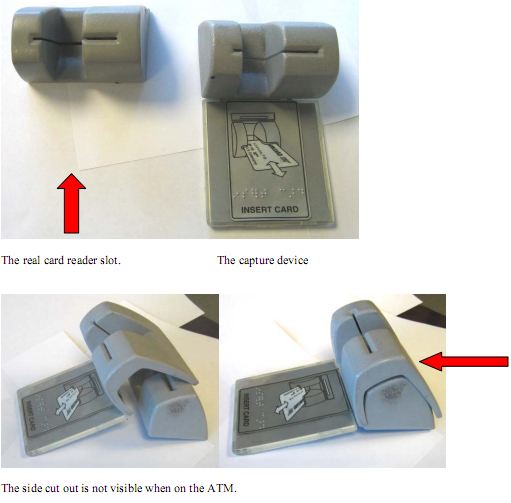
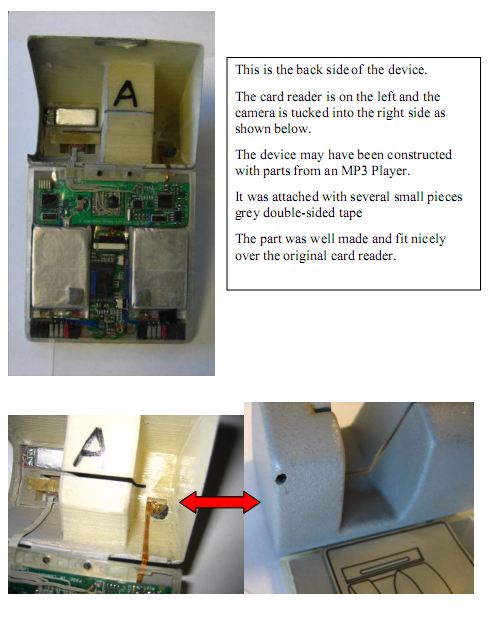
Pictured below is what’s known as a skimmer, or a device made to be affixed to the mouth of an ATM machine and secretly swipe credit and debit card information when bank customers slip their cards into the machines to pull out money. Skimmers have been around for years, of course, but thieves are constantly improving them, and the device picture below is a perfect example of that evolution.

This particular skimmer was found Dec. 6, 2009, attached to the front of a Citibank ATM in Woodland Hills, Calif. Would you have been able to spot this?


This is fairly professional job: Notice how the bulk of the electronics fit into the flap below the card acceptance slot. Also, check out the tiny pinhole camera (pictured below), ostensibly designed to switch on and record the victim’s movements as he or she enters their PIN at the ATM.


Also check these pics:

http://twitpic.com/4pko1
http://twitpic.com/4pknu

found on http://www.krebsonsecurity.com

Friday, 15 January 2010

UPDATE:Police catch Facebook-taunting fugitive

LONDON - An escaped British convict whose online antics drew an international Internet fan base has been caught after nearly four months on the run, police said Wednesday.

Craig "Lazie" Lynch, 28, was caught by Scotland Yard in southern England on Tuesday night. The force confirmed only that he had been arrested and gave few other details.

Lynch was serving time for burglary at a minimum security prison in Suffolk, eastern England. He escaped on Sept. 23 and has spent much of his time since posting defiant photos of himself mocking the police on the Internet.

The ensuing media attention drew as many as 40,000 fans to his Facebook page and other associated fan sites, spawning T-shirts and even a tribute song.

Lynch's page could not be located Wednesday.

Suffolk Constabulary said that Lynch had been charged with escaping from custody and was due to appear in court later Wednesday.

Online scammers try to hijack Haiti donation bandwagon

People are rushing to help out the millions affected by this week's Haitian earthquake. Scammers are also rushing to take advantage of that generosity.

News of the this week's devastating earthquakes in Haiti spread quickly across the Internet as people looked for ways to help in the recovery efforts from home. As usual, scammers have seized the opportunity to take advantage of search engine trends by setting up fake charity sites and sending out spam soliciting donations that will go anywhere but Haiti.

Scammers pop up anytime something significant happens, whether it's a natural disaster or the death of a celebrity, trying to redirect users to their just-registered domains to infect people with malware. Disasters such as the Haiti quakes, though, have the added benefit of concerned citizens wanting to donate money—indeed, as we learned during Hurricane Katrina, large numbers of ignorant Internet users were duped by fake donation sites and ended up sending their money to those with ill intentions instead of charities that could help those in need. And not all of them are obvious scams, either—one e-mail circulating in the UK claims to come from the British Red Cross and even displays the real Red Cross address in London, but directs users to a different domain when they try to click through.

It's bad enough that several organizations have issued warnings this time around, urging those looking to donate to do their research and choose reputable charities. For example, the Better Business Bureau has a quick guide on what to look for when donating money to Haiti recovery efforts. The Federal Bureau of Investigation also has a fraud alert on its site, warning people to be wary of unsolicited e-mails, those soliciting on social networking sites, and those who claim to be making donations to a charity on your behalf. The takeaway from both the BBB and the FBI is to only donate to charities that you know and trust, and if you need help, there's a list where you can research relief organizations that are accredited by the BBB.

If you don't have time or energy to do the research, however, we'll provide a few suggestions for you. The most obvious choice is to donate to the Red Cross, which has told various news outlets that it has already exhausted all of its supplies in Haiti and that there are far more people in need of help. However, the Red Cross website isn't the only place you can donate anymore—the organization says you can donate a quick $10 just by texting the word "Haiti" to 90999. There's also Doctors Without Borders/Médecins Sans Frontières, an international organization created by doctors that provide relief efforts around the world.

There are a number of other donation memes spreading around Facebook and Twitter, most of which ask you to SMS something to a number to donate $5 or $10. We caution you, however, to be wary of these unless you hear it directly from a reputable organization (such as the Red Cross, as mentioned above)—there's no telling how much you're actually charging back to your own phone bill or what services you may inadvertently sign up for.

While you wait for your donations to go through, you can head over to Google Maps to catch updated satellite images of the destruction areas. Google is also offering a KML overlay for Google Earth as part of its partnership with GeoEye.

Friday, 8 January 2010

1 in 6 Massachusetts Residents Estimated Affected By Data Breaches from 2008 Through 2009


The Boston Globe had a sobering story over the weekend where it estimated that 1 in 6 Massachusetts residents were affected by some type of data breach over the past two years.

According to the Globe, its review of state recorded data breaches showed that at least 1 million state residents had their data compromised through credit card theft, unauthorized medical information disclosures, or other types of confidential data breaches. The Globe story also provides a list of some of the more prominent data breaches reported to the state from June to November 2009 - there were 13 of them affecting over 88,000 residents.

In 2007, Massachusetts passed a law requiring institutions such as banks, stores, universities, etc., must inform consumers and state regulators about security breaches that might result in identity theft. Since then, some 807 data breaches have been reported to state officials by the end of November 2009 the Globe says.

The Globe said that 60% of the disclosed data breaches were caused by criminal acts, while 40% were due to negligence.

However, the Massachusetts disclosure law has some loopholes that were exposed by the Hannaford episode in 2008 which may result in an under reporting of unauthorized data disclosures.

In addition, according to this paper by Sasha Romanosky et al. at the Heinz School of Public Policy and Management at Carnegie Mellon University, disclosure laws such as the one in Massachusetts don't do much in the way of reducing identify theft.

Given the number of data breaches, it is almost a certainty that someone in Massachusetts has had their personal data disclosed more than once. If anyone has had this happen to them, I would be very interested in hearing about it.

The Globe also writes that, "On March 1, new state regulations will require organizations to take stronger measures to ensure data security. Institutions that hold such personal data will have to write an official security program and train employees to follow it. In addition, organizations will have to encrypt all personal data stored on laptops, flash drives, or other portable devices, or that is transmitted over the public Internet or wireless networks."

It will be interesting to see how long after the 1st of March it will be before a data breach is disclosed to state officials that violates these new rules. I would be surprised if it takes more than 3 months

POSTED BY: Robert Charette

Friday, 4 December 2009

H1N1 malware epidemic is more contagious than real deal


Malware authors are impersonating the CDC in a new scheme to propagate a trojan horse. Fraudulent e-mails sent by a botnet claim that the recipient must register for a fake state vaccination program but really link to a malware-infested phishing website.

The Center for Disease Control (CDC) issued a statement this week to warn citizens about a recent wave of phishing e-mails that deceptively claim to be from the government organization. The e-mails refer to a state vaccination program and tell recipients that they have to create a personal H1N1 vaccination profile.

No such vaccination program exists. A link in the e-mail directs users to a fraudulent website that attempts to infect their computer with malware. Specifically, the fake H1N1 messages are being used to propagate ZBot (also known as Zeus), a trojan horse that powers one of the most active botnets. The program serves as a spam relay and also surreptitiously collects private data about the user to funnel back to the botnet operator.

E-mail security company AppRiver detected the malware campaign earlier this week when it seemingly exploded in volume. The company's researchers wrote about it in a blog entry.

"We are seeing these messages at the extremely high rate of nearly 18,000 messages per minute netting over 1 million of these messages in the first hour alone," they wrote. "It is now officially flu season and considering the recent concerns over the H1N1 vaccine, I expect this to be a highly effective campaign against those who are not protected from this cyber-threat."

Security company Sunbelt Software, which publishes monthly reports on the prevalence of malware threats, says that ZBot held the top spot for seven months but declined sharply last month. Its November report, which was published today, lists ZBot as the second most prevalent malware threat and says that it represents 6 percent of all malware infections. The new H1N1 phishing scheme could potentially give it a boost.

ZBot's authors have used similar tactics in the past. A report at the CA Security Advisor Research Blog describes how previous iterations of have used fake e-mails claiming to come from the IRS, FDIC, and Microsoft. The websites linked in the e-mails attempt to get users to download the malware. They also have embedded iframes with PDF or Flash content that attempts to take advantage of security vulnerabilities in Adobe's software. Although Adobe has patched known vulnerabilities, users who have not updated to the latest versions are at risk.

Malware propagation is largely an exercise in social engineering. These fraudulent e-mails expand the botnet pool by preying on the ignorance and fear of recipients.

By Ryan Paul

Thursday, 19 November 2009

Ethics leaks spur House bill banning P2P apps on .gov PCs


Over the past year, there have been several embarrassing incidents where private government documents have leaked because employees didn't know how to properly configure P2P client software. For the US House of Representatives, the last straw came when ethics documents were leaked. A bill has been introduced to ban the use of P2P apps by federal employees.

Peer-to-peer filesharing applications have been wildly popular, especially among those interested in accessing pirated software, music, and media. But not everyone who operates a P2P client knows how to properly configure the software, and some clients may share entire directories unless explicitly directed not to. Apparently, some government employees have exhibited this sort of carelessness, as private and secret government documents have shown up on P2P networks. Now, at least one Congressman has had enough, and has introduced a bill that would ban the use of P2P software by government employees.

The Congressman in question is Edolphus Towns of New York, who chairs the Committee on Oversight and Government Reform. In a statement announcing the bill's introduction, Towns highlights a number of embarrassing incidents in which sensitive government files showed up on P2P networks. These include schematics for the Presidential helicopter and the location of a first-family safe house, as well as the financial records of a Supreme Court Justice.

But the cynic would suggest that the real spur to action was the leak of a whole series of documents related to ethics investigations of Towns' fellow House members, which he also cited in the announcement. This included a full list of ongoing investigations and details on a number of them. The committee that suffered the leak issued a statement (PDF) at the end of October which indicated that P2P software was involved in the leak, so this appears to involve a relatively quick response.

The bill itself, termed the Secure Federal File Sharing Act, calls on the Director of the Office of Management and Budget to issue guidance on the use of P2P software, and provides the Director some guidance on what it should be: P2P software will be banned on government-owned computers. The OMB Director will have 90 days to come up with rules for government workers and contractors that have access to documents at home. Procedures will also be put in place for government agencies that have legitimate need for P2P software, in order to grant them exceptions.

By 180 days after the bill's passage, the OMB will have to specify procedures to detect and purge P2P use from within the government's networks. After the procedures are in place, the OMB will need to provide Congress with an annual report detailing all the exemptions that are in place.

Although it's tempting to snicker at the ethics leaks being the primary event that spurred Congress to action, it wouldn't be at all surprising if some of the complaints that leaked are the result of misunderstandings or political disagreements; all of them will almost certainly be used (and abused) in future political campaigns. In any case, the other leaks are certainly more severe, and there's no reason to think that the average government employee is ever going to be more technically savvy or security-literate than the general computer using population, so the law addresses a real issue.

Given that P2P software does have a number of legitimate uses, however, blanket restrictions and a formal approval process may turn out to be a hindrance. Assuming the bill passes, the real challenge is likely to be crafting a quick and effective exemption process.

By John Timmer