Showing posts with label scam. Show all posts

Friday, 14 May 2010

Single group did 66% of world's phishing

A single criminal operation was responsible for two-thirds of all phishing attacks in the second half of 2009 and is responsible for a two-fold increase in the crime, a report published this week said.
The Avalanche gang is believed to have risen out of the ashes of the Rock Phish outfit, which by some estimates was responsible for half the world's phishing attacks before fizzling out in late 2008. Driving the success of both groups is their use of state-of-the-art technology for mass-producing imposter websites and distributing huge amounts of crimeware for automating identity theft.
"Avalanche uses the Rock's techniques but improved upon them, introducing greater volume and sophistication," the report, released by the Anti-Phishing Working Group, stated.
Central to Avalanche's success is its use of fast-flux botnets to host phishing sites. The use of peer-to-peer communications makes it impossible for a single ISP or hosting provider to to pull the plug on the infrastructure. The gang also excels at launching attacks from a relatively small number of domain names that often appear confusingly identical to each other, such as 11f1iili.com and 11t1jtiil.com. Those abilities also fuel the success.
There were 126,697 phishing attacks during the second half of 2009, more than double the number in the first half of the year or from July through December of 2008, the APWG report said. Avalanche, which was first identified in December of 2008, was responsible for 24 percent of phishing attacks in the first half of 2009 and for 66 percent in the second half. From July through the end of the year, Avalanche targeted the more than 40 major financial institutions, online services, and job search providers.
Curiously, Avalanche may turn out to be a victim of its own success.
"During an Avalanche campaign, it was not unusual for the target institutions, the relevant domain name registrar(s), a domain name registry, and other responders and service providers to all be aware of the campaign and working on mitigation at the same time," the report stated. "As a result, Avalanche attacks had a much shorter average uptime than non-Avalanche phishing attacks, and community efforts partially neutralized the advantage of the fast-flux hosting."
White hats briefly shut down the Avalanche infrastructure in mid November, and ever since then phishing attacks generated by the group have dropped precipitously. Last month, the gang launched just 59 attacks, each one with a separate domain.

A PDF of the report is here. ®
By Dan Goodin

Wednesday, 10 February 2010

Facebook ‘Cash Scam’ Continues to Grow Even Bigger


Over the past few years social networking sites such as Facebook and Twitter have given unprecedented access to people’s private lives. More and more personal information is revealed through photos, status updates and conversations that are all being documented online. Last week, the Serious Fraud Office of London (SFO) warned that Facebook and Twitter are being used to harvest users’ personal financial details,

“The public should be aware of the predatory nature of fraudsters and be careful about revealing personal information on social-networking sites, as this has become a primary method of harvesting information and targeting victims,” SFO said.


In a joint venture between London police and Financial Services Authority, over 10,000 people were notified that their names were on a “master list” that contained a range of personal information, that might include: names, address, phone number, place of business, income and relationship status. While this is the only reported list, it’s quite possible thousands more were already victims of this latest cash scam.

Facebook users may not mention all that personal information on their Facebook page, however, they may have it listed on a combination of networking sites. For example, a Facebook user will list their name and location along with photos on Facebook. The scammer can take that information and then look you up on LinkedIn and Twitter to find out your personal website, job, position, average income, number of years employed, education level and parlay all that information into a “cash scam.”

Fraudsters are using this information to set up “boiler rooms” and contact people on this master list. Boilers rooms look to employ high pressure sales tactics to push unwanted, over priced, or sometimes non-existent stock to unsuspecting buyers. Boiler rooms are nothing new, but using Facebook to gather leads and target people is becoming a serious problem.

The FSA is clearly trying to stay ahead of the scam, “By writing to people now, we can raise awareness of this type of fraud and help protect people from losing money to these criminals,” FSA said. While multiple efforts are being taken to stop these criminals, these cash scam continue to grow and more boiler rooms continue to operate off shore. It’s up to the individual to be aware of such fraud and report any phone calls that you suspect could be criminal.

In the mean time, keep your friends close, your Facebook account closed to outsiders, and don’t allow just anyone to view your personal details on your Facebook page.

posted by Mr.404

Monday, 18 January 2010

Would You Have Spotted the Fraud?

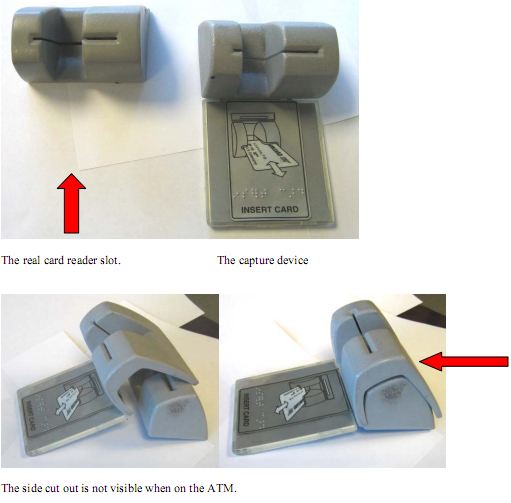
Pictured below is what’s known as a skimmer, or a device made to be affixed to the mouth of an ATM machine and secretly swipe credit and debit card information when bank customers slip their cards into the machines to pull out money. Skimmers have been around for years, of course, but thieves are constantly improving them, and the device picture below is a perfect example of that evolution.

This particular skimmer was found Dec. 6, 2009, attached to the front of a Citibank ATM in Woodland Hills, Calif. Would you have been able to spot this?


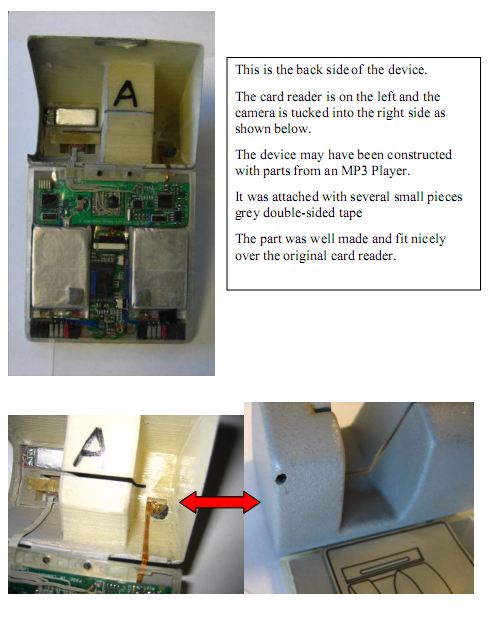
This is fairly professional job: Notice how the bulk of the electronics fit into the flap below the card acceptance slot. Also, check out the tiny pinhole camera (pictured below), ostensibly designed to switch on and record the victim’s movements as he or she enters their PIN at the ATM.


Also check these pics:

http://twitpic.com/4pko1
http://twitpic.com/4pknu

found on http://www.krebsonsecurity.com

Friday, 15 January 2010

Online scammers try to hijack Haiti donation bandwagon

People are rushing to help out the millions affected by this week's Haitian earthquake. Scammers are also rushing to take advantage of that generosity.

News of the this week's devastating earthquakes in Haiti spread quickly across the Internet as people looked for ways to help in the recovery efforts from home. As usual, scammers have seized the opportunity to take advantage of search engine trends by setting up fake charity sites and sending out spam soliciting donations that will go anywhere but Haiti.

Scammers pop up anytime something significant happens, whether it's a natural disaster or the death of a celebrity, trying to redirect users to their just-registered domains to infect people with malware. Disasters such as the Haiti quakes, though, have the added benefit of concerned citizens wanting to donate money—indeed, as we learned during Hurricane Katrina, large numbers of ignorant Internet users were duped by fake donation sites and ended up sending their money to those with ill intentions instead of charities that could help those in need. And not all of them are obvious scams, either—one e-mail circulating in the UK claims to come from the British Red Cross and even displays the real Red Cross address in London, but directs users to a different domain when they try to click through.

It's bad enough that several organizations have issued warnings this time around, urging those looking to donate to do their research and choose reputable charities. For example, the Better Business Bureau has a quick guide on what to look for when donating money to Haiti recovery efforts. The Federal Bureau of Investigation also has a fraud alert on its site, warning people to be wary of unsolicited e-mails, those soliciting on social networking sites, and those who claim to be making donations to a charity on your behalf. The takeaway from both the BBB and the FBI is to only donate to charities that you know and trust, and if you need help, there's a list where you can research relief organizations that are accredited by the BBB.

If you don't have time or energy to do the research, however, we'll provide a few suggestions for you. The most obvious choice is to donate to the Red Cross, which has told various news outlets that it has already exhausted all of its supplies in Haiti and that there are far more people in need of help. However, the Red Cross website isn't the only place you can donate anymore—the organization says you can donate a quick $10 just by texting the word "Haiti" to 90999. There's also Doctors Without Borders/Médecins Sans Frontières, an international organization created by doctors that provide relief efforts around the world.

There are a number of other donation memes spreading around Facebook and Twitter, most of which ask you to SMS something to a number to donate $5 or $10. We caution you, however, to be wary of these unless you hear it directly from a reputable organization (such as the Red Cross, as mentioned above)—there's no telling how much you're actually charging back to your own phone bill or what services you may inadvertently sign up for.

While you wait for your donations to go through, you can head over to Google Maps to catch updated satellite images of the destruction areas. Google is also offering a KML overlay for Google Earth as part of its partnership with GeoEye.